The Hospital
At first it was simply a hostel, a free shelter at night-fall for passers-by and travelers. It was called ‘St. Nicholas de Bruille’ after the name of the neighbouring parish.
In the spirit of the Middle Ages, hospitality was understood not only to mean practical help, offering food and shelter from the dangers of the night to whoever presented themselves, but also spiritual service, welcoming and serving the poor like Christ himself.

Around the fireplace of the main room upon which sits a large cooking pot, the sisters’ life is centered around common prayer and service of the guests.
Pope Innocent IV granted them his protection in 1249.
At the end of the 13th century the hostel became a hospital. The century of long pilgrimages and distant journeys gave way to a period of famines and epidemics. The poor were the first to fall sick and they were welcomed into the house without charge. As the hospital lived on public charity, the bishop of Cambrai restricted the number of sisters to six, so that they “should not eat the bread of the poor”. This restricted number remained the rule until the 17th century.
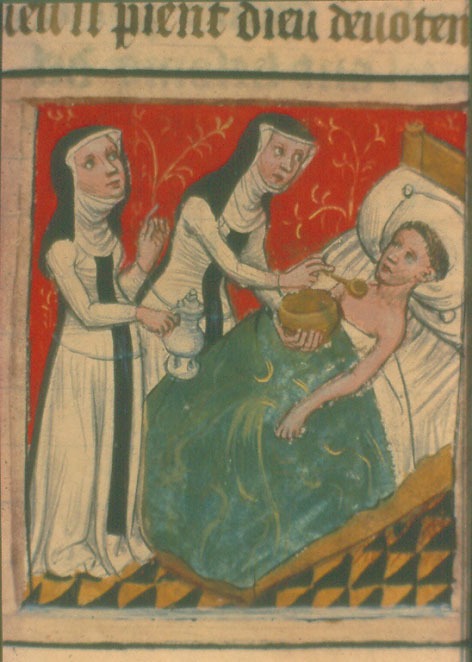
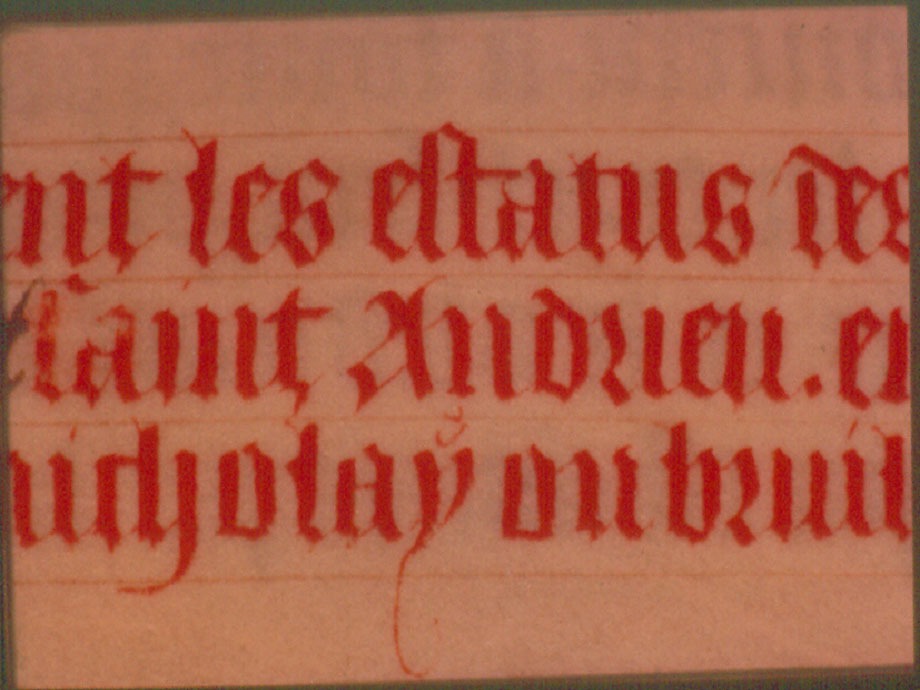
In the 15th century the hospital was dedicated to Saint Andrew, no doubt to distinguish it from the hospital of Saint Nicholas, which had opened in the town of Tournai. Under the influence of the Prioress Marie de Corbehen, the primitive Augustinian Rule was revised, translated into French and adapted to the life of the community. By now the hospital was flourishing.
The 16th century was a time of trials and hardship. The town was besieged and occupied by the troops of Henry 8th , the king of England. The community was, a few years later, afflicted by the plague. In the Netherlands however, the public authorities were responsible for organising the welfare of the people and in Tournai two large hospitals were opened to look after the sick. The hospital of Saint Andrew started to take in the most vulnerable, and the elderly who were bedridden. This long-term care of the sick allowed the sisters to live a more regular form of community life with the majority aspiring towards a more contemplative way of life consecrated entirely to prayer. This orientation towards a monastic way of life was moreover very much encouraged by the decrees of the Council of Trent.
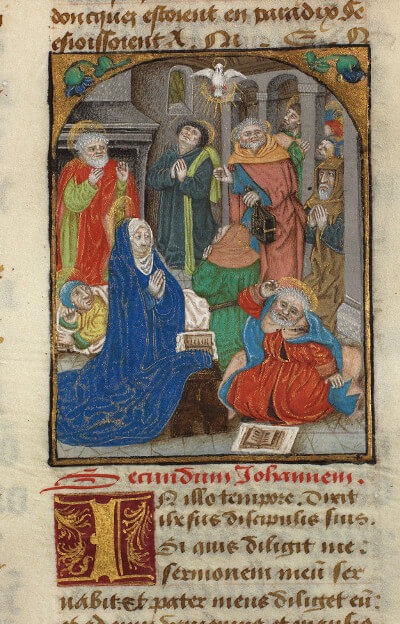
Under the authority of Marie de la Chapelle, the hospital became a monastery, and was officially recognized as such on the 16th September 1611.